Now for the Antidote
The Cappadocia region of central Turkey has long been on my 'bucket list' of places to visit - to take a hot-air balloon ride over the iconic fairy chimneys that dot the arid landscape and tour the ancient churches and monastaries near Göreme.
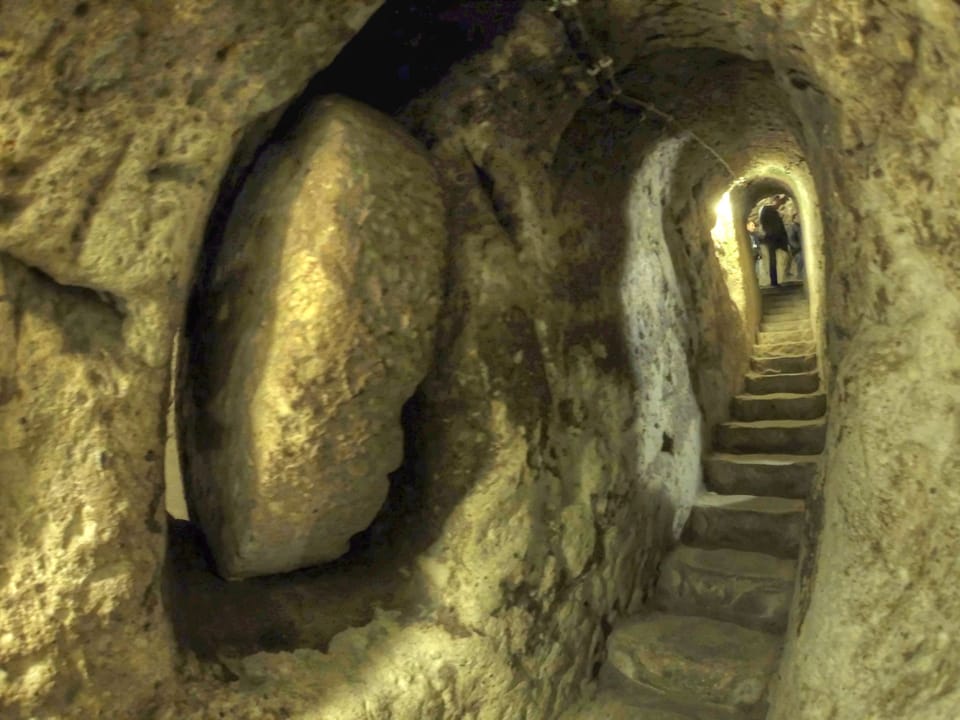
But the real draw, for me at least, lies underground. Cappadocia is the site of more than 200 ancient, underground towns and cities that are thousands of years old; refuges so large that they permitted the entire population to live below the surface for months at a time.
Construction of the cities was initiated by the Phyrigian society at the dawn of the Iron Age (around 600 BCE), and they were continuously and periodically inhabited by local residents for more than two thousand years.
 Dale Dunlop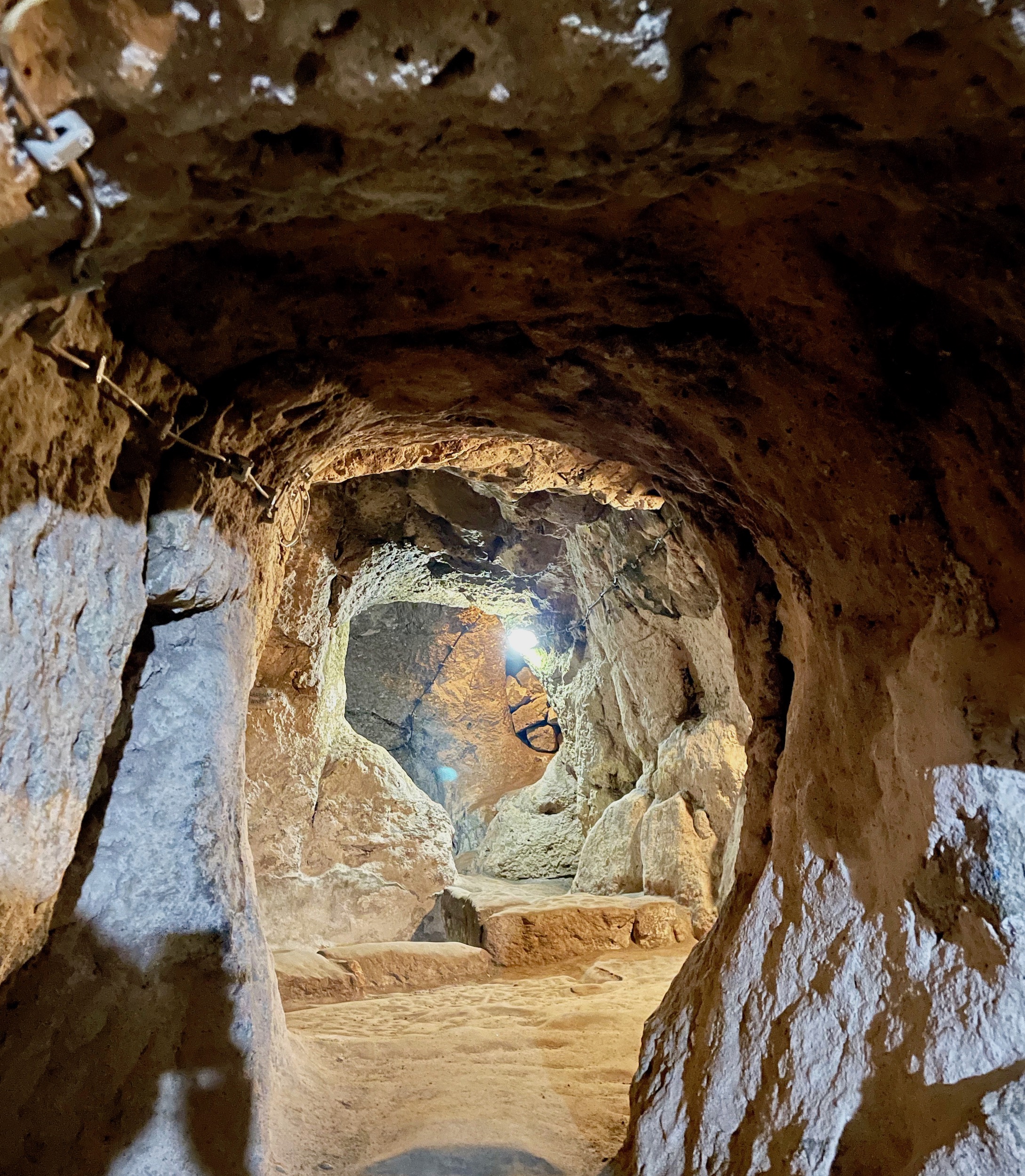
The largest of these, Derinkuyu (originally known as Elengubu), is comprised of 18 levels of tunnels and rooms that stretch for hundreds of miles underground. At its peak, it could house around 20,000 people. (You can see a rudimentary map at the link from The Maritime Explorer, above.)
Derinkuyu contains not just housing, but dedicated livestock stables, wineries, chapels, and places for food storage. Multiple wells and ventilation shafts ensured inhabitants could safely remain underground. And it was constructed with multiple entrances to ensure people could not be trapped inside by hostile forces. The entrance to each level could also be closed off by those inside by rolling a heavy boulder to block the narrow passageway.
Each level of the city was carefully engineered for specific uses. Livestock was kept in stables nearest to the surface to reduce the smell and toxic gases produced by cattle, as well as provide a warm layer of living insulation for the cold months. The inner layers of the city contained dwellings, cellars, schools and meeting spaces. Identifiable by its unique barrel-vaulted ceilings, a traditional Byzantine missionary school, complete with adjacent rooms for study, is located on the second floor. According to De Giorgi, "the evidence for winemaking is grounded in the presence of cellars, vats for pressing and amphoras [tall, two-handled jars with a narrow neck]." These specialised rooms indicate that inhabitants of Derinkuyu were prepared to spend months beneath the surface.
The Phyrigians and the multiple societies to come after them, unfortunately, had good reason to use these subterranean refuges. The region saw successive incursions and occupations by invading armies – from the neighboring Lydians who ultimately conquered Phyrgia, to the Persians who conquered them, to subsequent Arab and Mongol invaders from the east, and then battles between the defending Byzantines and attacking Ottomans in later centuries.
In fact, it wasn't until 1923, when the Cappadocian Greek Christian population was completely evacuated during the large-scale population exchange between Greece and Turkey, that the underground citites ceased being regularly used.
Talk about necessity being the mother of invention.
The billionaire bunkers club
I think about these ancient cities often when I read the latest fantastical article about ulta-luxe 'Doomsday bunkers' constructed by and for billionaires that will supposedly allow them to ride out some looming apocalypse while the rest of us are "left to die."
- You have Mark Zuckerberg's $100 million+ compound in Hawaii, which will allegedly will include two main above-ground mansions, with a combined 30 bedrooms and 30 bathrooms, plus a 5,000 sqare foot underground bunker with its own energy and food supplies.
- Palantir founder Peter Thiel bought a 477-acre former sheep ranch on New Zealand's South Island, in the early 2000s, though property records don't indicate any significant construction there since then.
For the second tier of the super-wealthy (the merely megarich instead of obscenely so), there is now a cottage industry of architects, builders, and security experts constructing elaborate members-only retreats in locations like a former missile silo in Kansas and renovated former Soviet security bunker in the Czech Republic.
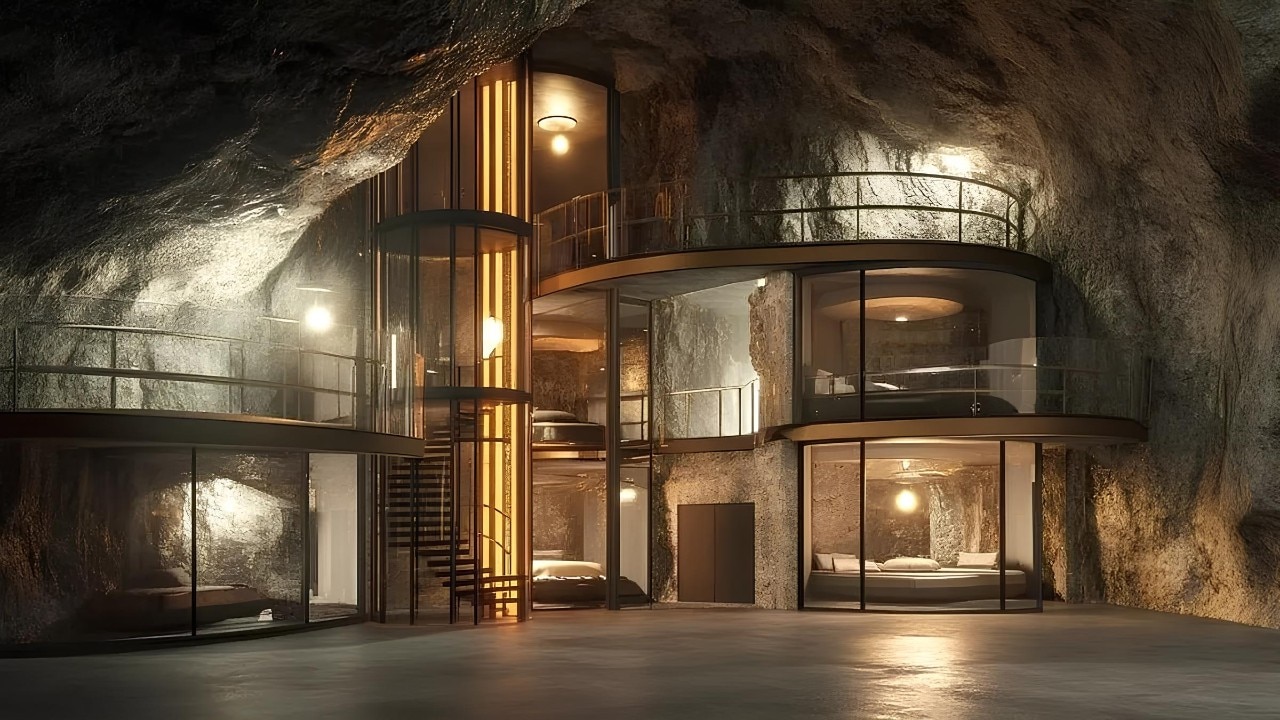
Even more exclusive is Aerie, the 300-million-dollar project developed by SAFE and announced for 2026: an underground club for 625 members, each equipped with a suite that can be modeled as a private residence—up to 20,000 square feet—immersed in an ecosystem of indoor pools, fine-dining restaurants, AI-assisted medical centers, and longevity-oriented facilities.
 Ian Bond Deputy director, Centre for European Reform

Just one problem
Writer and media theorist Douglas Rushkoff sort of blew the whistle on the existence and proliferation of these bunkers a few years ago when he wrote an opinion piece in the Guardian detailing his meeting with an unnamed group of six hedge fund titans who wanted his advice on one key sticking point.
Finally, the CEO of a brokerage house explained that he had nearly completed building his own underground bunker system and asked: “How do I maintain authority over my security force after the Event?”
Yes, how to force people to continue to serve and cater to you after some great cataclysm ends modern society.
Rushkoff reports that his audience did come with some ideas of their own: Could the plebes be coerced into wearing some kind of disciplinary collar in return for allowing they and their families access to the bunker? Combination locks on the food supply that only they (the owners) knew? Maybe robots instead of human servants?
So, what did Rushkoff advise?
The billionaires were underwhelmed by his proposal, he reports, which was much simpler, cheaper and easier to implement than human shock collars or a robot army.
"I tried to reason with them, " he writes. "I made pro-social arguments for partnership and solidarity as the best approaches to our collective, long-term challenges. 'The way to get your guards to exhibit loyalty in the future was to treat them like friends right now,' I explained. 'Don’t just invest in ammo and electric fences, invest in people and relationships.' They rolled their eyes at what must have sounded to them like hippy philosophy."
"Talk to any self-respecting prepper, and even they will tell you the first step to prepping is make sure everyone on your block is prepping also, right? Otherwise, you’re the one family in the Twilight zone who’s got the bomb shelter and everybody else is banging on it. That’s not viable, right?"
Support views you can use!
I am committed to keeping The View from Here free for all readers. If you liked this article, you can support my work on Patreon. Or, click this link to send a one-time donation.
History is on our side
If you believe that the best predictor of future behavior is past behavior, then the lessons we should have learned over the vast expanse of human history - from cataclysms both natural and man-made - is that human nature favors cooperation.
When disaster threatens, most people try to help their neighbors and share resources. This has been key to the survival of our species for centuries.
The ancient Phyrigians and generations of their descendants survived because they banded together to solve the problems that were facing all of them. They didn't build 1,000 different individual and competing citadels, but 200 cooperative, interdependent communities.
Modern media narratives push a dystopian "survival of the fittest/dog-eat-dog" mindset, where all of human society will be sorted into a selected group of elite winners, at the expense of the larger mass of losers. In the words of the VICE podcast linked above, "When disaster strikes, the elites are saved and normal people are left to die."
And sure, in individual disasters, it is often the privileged with access to the most resources who have an unfair advantage over the vulnerable. But, at a societal level, cooperation is much more useful than competition.
Increasingly, a lot of smart people are articulating a different vision. A one in which smart people working together can find solutions to our most challenging problems.
 Douglas Rushkoff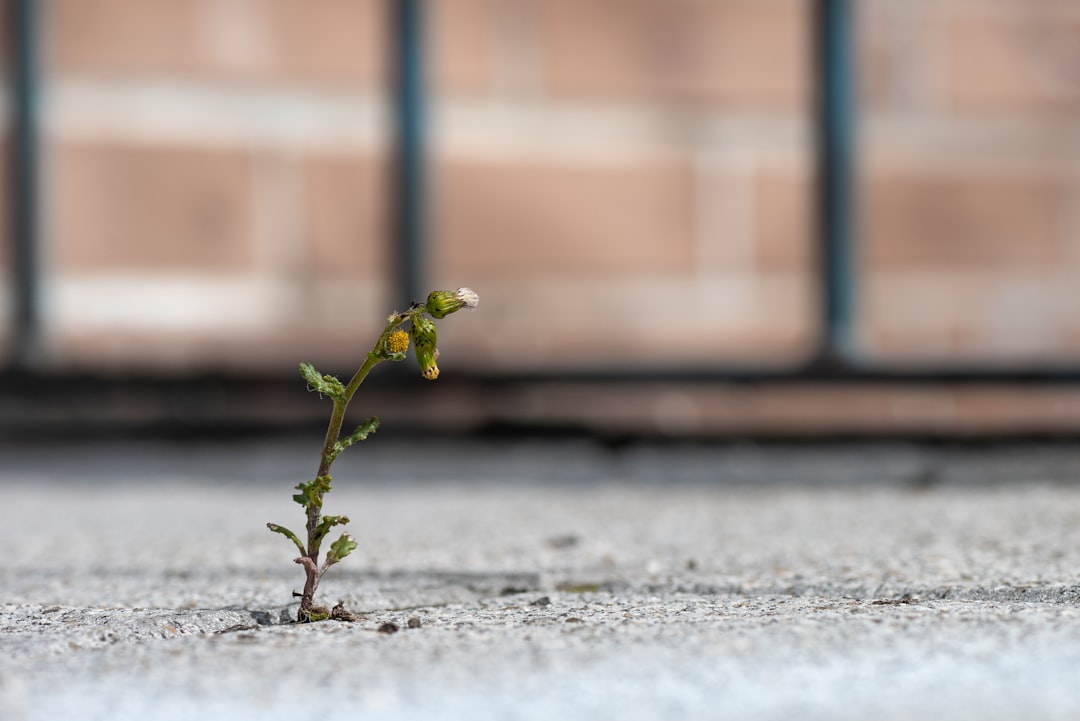
Despite all evidence to the contrary, there is a way out or—better—through. All you have to do is tilt the picture a new way, so you can distinguish between the actual limits and those that have been imposed by people and institutions who don’t want us to even try (either because they think it’s not possible, or because it will undermine their own efforts to exploit widespread doom for their own self-interest).
 Fiona Harvey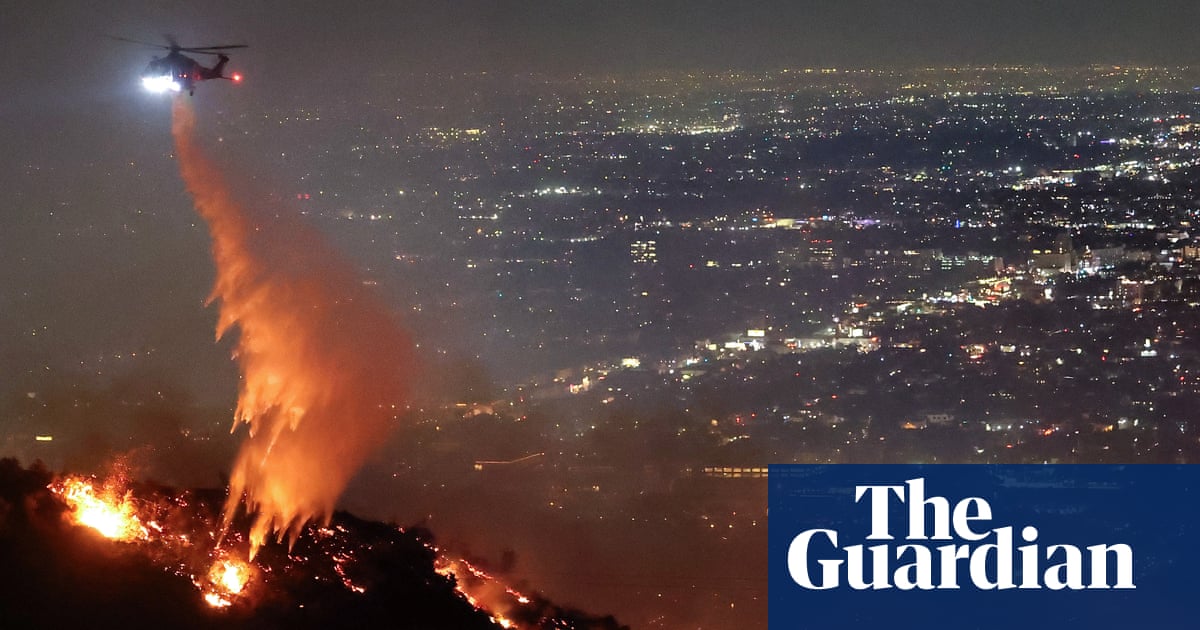
“The economics of the [low-carbon] transition look ever more attractive. Every time we look at the science it looks more worrying, and every time we look at the technology it is more encouraging. In an increasingly insecure world, countries and industries will be seeking independence from fossil fuels and the great volatility such dependence brings. In a world with sluggish growth, countries and industries will be seeking new opportunities. These will be in the technologies of the 21st century, not the 19th and 20th centuries.”
 Rachel Donald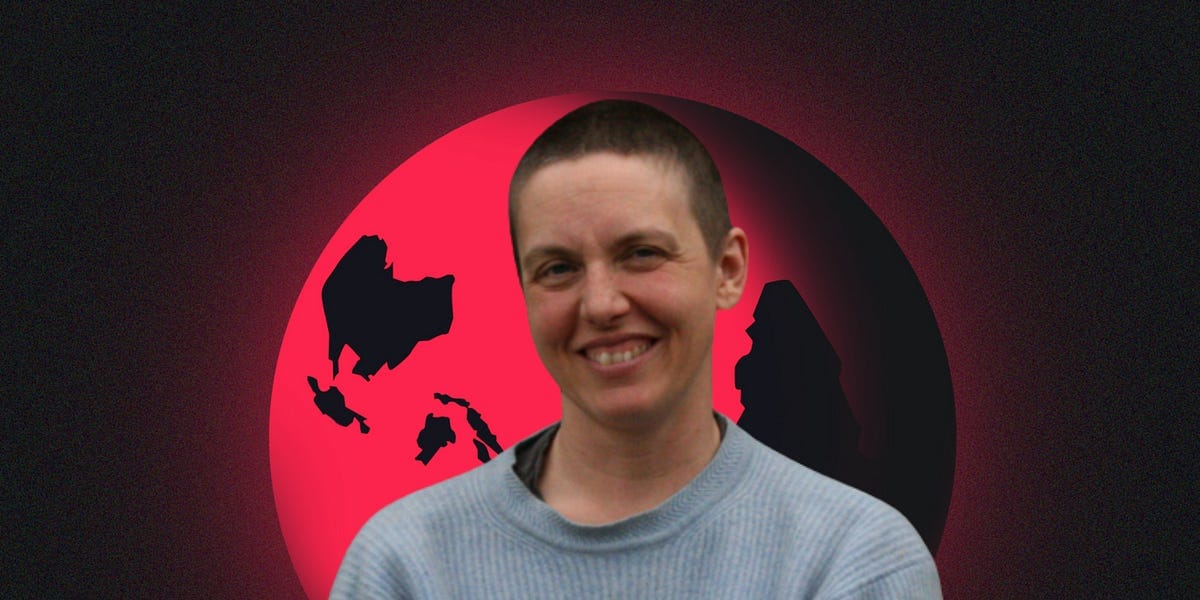
Permaculturist and educator, Kara Huntermoon, says the hobbies we pick up now can be skills we pass on to our children, even if we never have to use them ourselves. In this wide-ranging and empathetic conversation on relationality, intergenerational solidarity, and hard work, Kara explores how community sufficiency practiced properly creates the common ground in which we can plant the future.
This is optimism, not 'positivity'
I wanted to write this second essay not just because I felt that the last one was a downer. But because I wanted to be clear that I feel that it is important to not just disengage and adopt an attitute of fatalism. Neither do I agree with blinkered optimism – a 'don't worry, be happy/this too shall pass' that absolves us of the responsibility to do anything about the challenges we are facing.
 Cathi Harris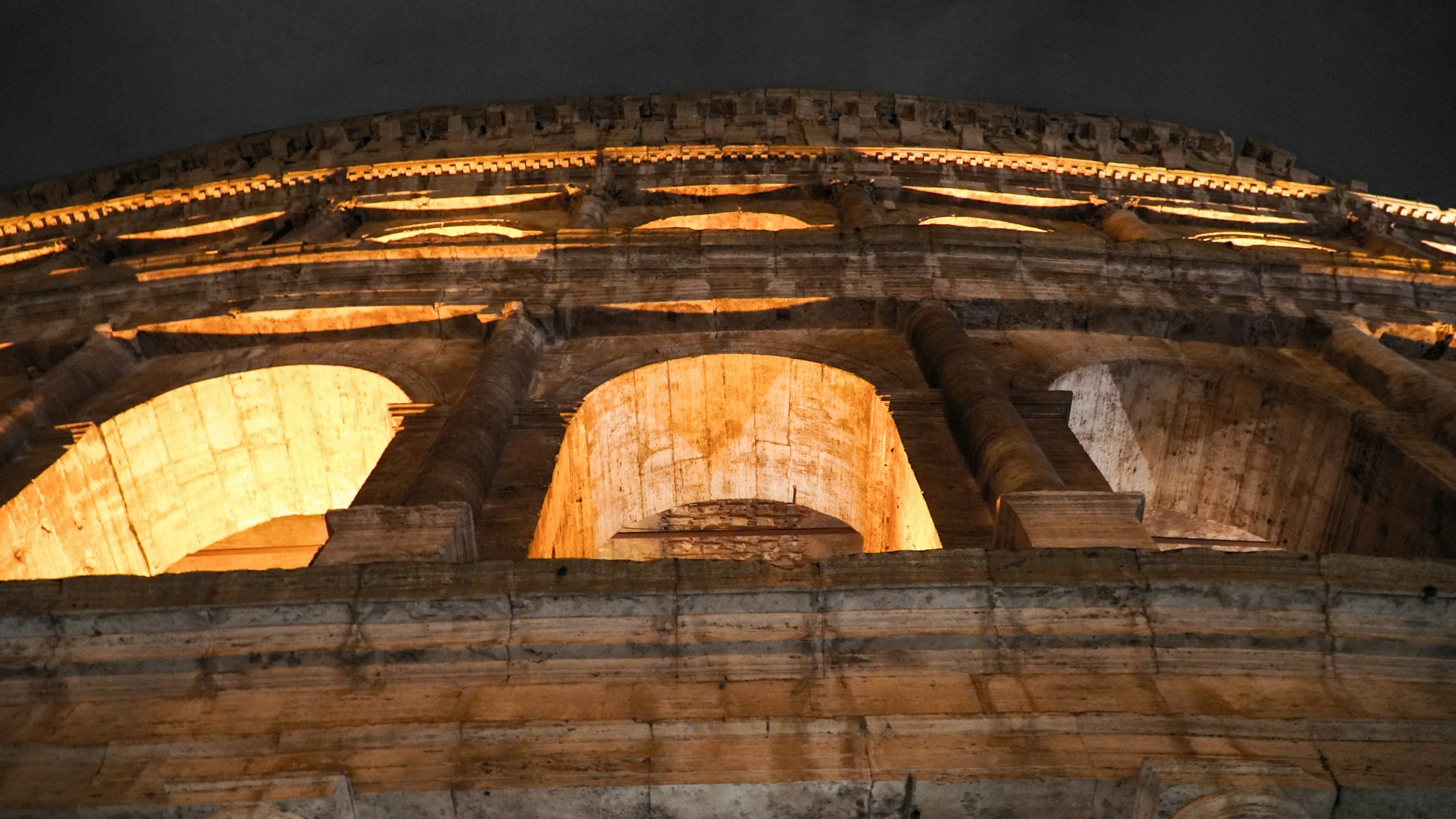
But tuning in to the endless rants of political YouTubers and podcasters leaves me feeling hopeless and exhausted.
And I see now that that too, is a tool of the oligarchy that wants us to feel defeated. To believe that we are the masses doomed to die outside the reinforced steel doors of their modern day walled castles.
But I believe most of us are smarter than that - and, I believe we are smarter than them.
Who thinks building a bug-out bunker on an island in the Pacific during a time of rising sea levels is a good idea? Who thinks that a captive human workforce wearing shock collars is going to work out for the guy at the top of the food chain?
Not me.
So, let them spend all of their ill-gotten gains on 30-bedroom mansions and treetop shelters, on artificial sunlight and underground saunas. (And word to the consultants who are selling them on this: No hate. Get that money while you can.)
But I am refocusing my attention and energy and activism on building connections with people offline, on alternatives to the endless doomscroll, and on working toward sustainable solutions for all people.
Some Resources
Some books, podcasts and newsletters that I am following that point us toward a sustainable future with renewed human connection.

 You’re Not Crazy: Reality Has Grown Absurd
 Rachel Donald
 Maurice Frank
Member discussion